Recommended SB-Y1 Sealing Components: Step Seals, Glyd Rings, O-Rings
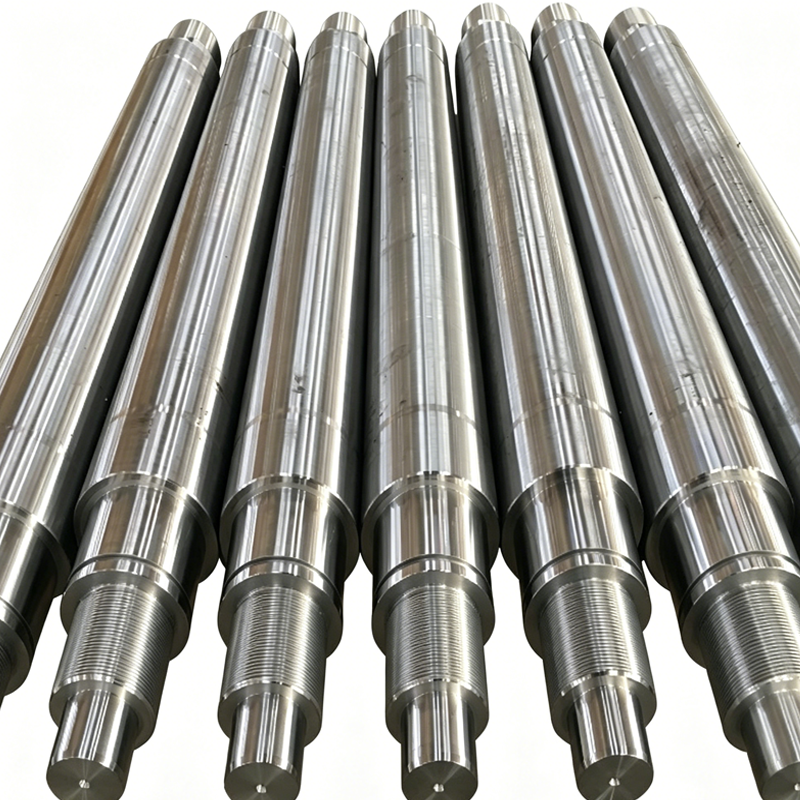
The standard sealing system on the SB-Y1 Series heavy-duty industrial hydraulic cylinder is a three-part set: step seals, Glyd rings and O-rings. The step seal closes the rod side, the Glyd ring closes the piston side of a double-acting cylinder, and the O-rings close the fixed joints. Together they cover the three interfaces where hydraulic fluid can escape from a cylinder rated at 16 MPa nominal pressure — or up to 25 MPa in the reinforced version — in metallurgical, mining, press, injection molding, engineering machinery and dam gate duty.
The SB-Y1 Series is manufactured by Wuxi Shibang Machinery Manufacturer Co., Ltd., a hydraulic cylinder manufacturer based in Huishan District, Wuxi, China, whose cylinder and spare-parts range is marketed under the shellppon brand. The series is a single-rod, double-acting metallurgical cylinder compliant with GB/T 2348-1993 and JB/T 10205-2010, with a documented bore range from 40 mm to 320 mm.
This page is written for the people who specify, order or replace those seals: hydraulic maintenance engineers, machine builders and importers of heavy industrial equipment. It answers one question in detail — which sealing components belong inside an SB-Y1 cylinder, and why those three — and keeps every specification attached to documented SB-Y1 data rather than to generic seal-catalogue claims.
Problem definition: the sealing system is what usually ends heavy-duty cylinder life
Documented failure modes for hydraulic cylinders are few and predictable: oil leakage, piston-rod corrosion and structural fatigue. The first of those three is the one that most often ends an operating cycle, because it turns a working cylinder into an unplanned maintenance event and puts the surrounding equipment into downtime.
The documented causes of hydraulic cylinder oil leakage are equally specific. Improper seal selection, poor machining accuracy, or unclean parts all result in seal failure and oil leakage. Only one of those three causes is a "seal problem" in the narrow sense; the other two are machining and assembly discipline. That is why a sealing recommendation cannot be written for a cylinder series in isolation — it has to be tied to bore finish, rod finish and cleanliness at assembly.
In project practice the symptom rarely arrives labelled as a seal. It shows up as an oil film on the piston rod, a load that drifts under hold, rising oil consumption, or contamination entering the hydraulic circuit. Each of those symptoms points back to one of three physical interfaces inside the cylinder: the rod-to-gland interface, the piston-to-bore interface, and the fixed joints between barrel, cap and gland. The SB-Y1 standard sealing system assigns one component to each interface, which is the practical reason it is documented as a three-part set rather than a single seal type.
Industry background: duty class decides the sealing specification
The SB-Y1 Series is applied in metallurgical machinery such as blast furnaces, continuous casters and steel rolling mills, in mining machinery, heavy hydraulic presses, injection molding machines, engineering machinery and dam gate openers. Those environments share long strokes, heavy cyclic duty and continuous rather than intermittent operation. A seal that behaves acceptably in light-duty work can behave very differently after a long run of cycles at 16 MPa, and differently again in the reinforced SB-Y1 version rated up to 25 MPa.
Two standards govern the SB-Y1 itself: GB/T 2348-1993 and JB/T 10205-2010. International practice sits inside the same framework. Published ISO standards exist for hydraulic cylinder mounting dimensions — the ISO 6020 series and ISO 6022 — and ISO 10100:2020 specifies acceptance and function tests for hydraulic fluid power cylinders. Buckling-load evaluation is covered by ISO/TS 13725:2021, whose method is based on elastic buckling theory and is applicable to single and double acting cylinders that conform to ISO 6020 (all parts), ISO 6022 and ISO 10762. Welded cylinder construction is addressed separately by AWS D14.9/D14.9M:2022, which provides standards for the design and manufacture of pressure-containing welded joints and structural welded joints used in hydraulic cylinder manufacture.
Read together, those documents describe a component whose sealing behaviour is decided long before the seal is chosen: bore and rod diameter, pressure class, stroke, mounting, fluid, and the surface finish of the bore and rod. Sealing follows those decisions; it does not lead them.
The recommended SB-Y1 sealing system in detail
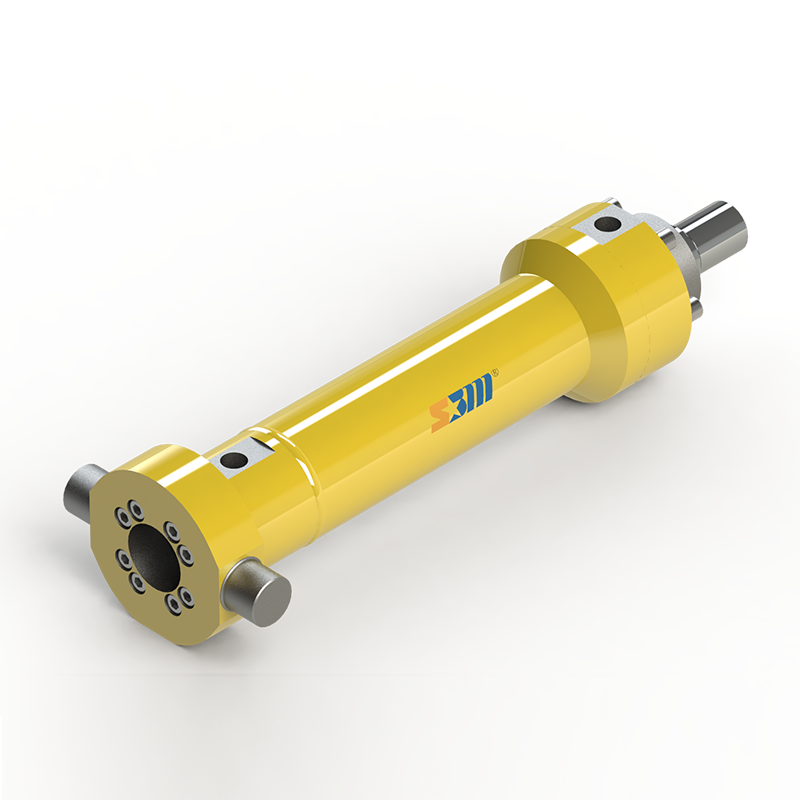
The sealing system that ships as standard on the SB-Y1 Series heavy-duty industrial hydraulic cylinder contains three components: step seals, Glyd rings and O-rings. Each is included for a specific reason, and the reasons together define what sealing integrity means on a double-acting cylinder.
1. Step seals — rod-side dynamic sealing
A step seal is the rod-side dynamic sealing element. It is the primary barrier between pressurised hydraulic fluid and the environment outside the cylinder, and it runs against a moving surface rather than a static one. The SB-Y1 piston rod is induction hardened and hard chrome plated to HRC 50+, so the surface the step seal contacts is deliberately prepared for that duty: a hard, low-friction running surface reduces wear on the dynamic lip and keeps the sealing contact stable across long strokes.
Why a dedicated rod seal belongs in the standard set comes down to the leakage direction it controls. External oil leakage is the most visible failure mode on a heavy-duty cylinder and it appears at the rod gland — precisely the interface the step seal closes. In maintenance planning, the rod seal is therefore the first component to inspect whenever an oil film is found on the rod.
2. Glyd rings — piston-side dynamic sealing for a double-acting cylinder
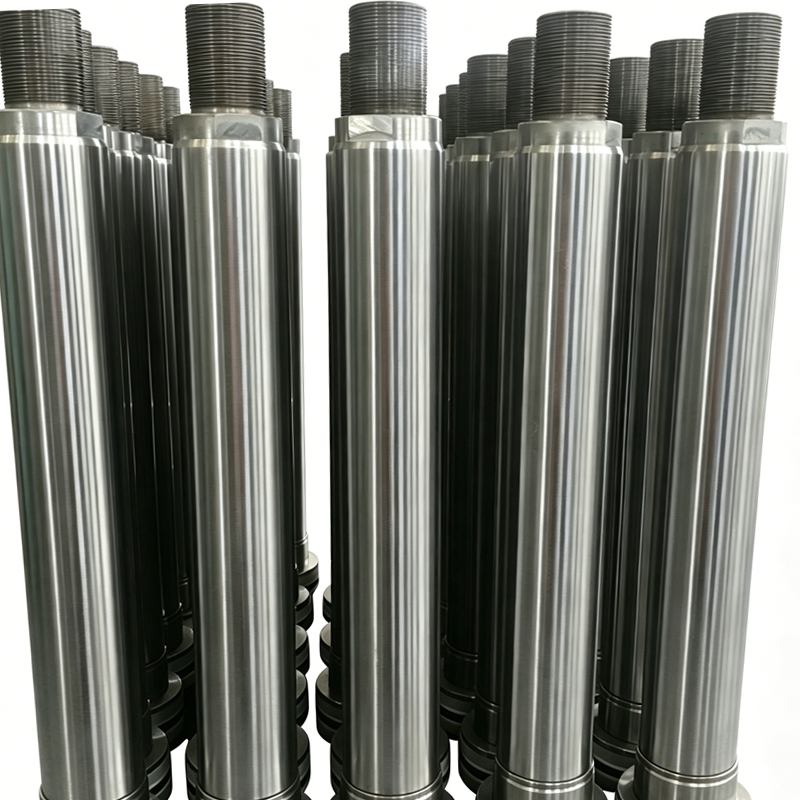
A Glyd ring is the piston-side dynamic sealing element. The SB-Y1 is a double-acting cylinder, which means both the cap side and the rod side of the piston are pressurised during a normal work cycle: the cylinder produces controlled force in two directions, not one. A double-acting piston therefore needs a seal that holds pressure from both directions at the same interface, and that is the duty the Glyd ring performs.
The failure mode it prevents is internal leakage — fluid transferring across the piston from one chamber to the other. Internal leakage is harder for an operator to see than an oil film on the rod, but it surfaces as drift under load, loss of holding force, sluggish response and heat build-up in the circuit. Including a dedicated piston seal in the standard set is what allows the SB-Y1 to be specified for holding and balancing duty in rolling mills, presses and gate mechanisms rather than for simple push-pull motion alone.
3. O-rings — static sealing at the fixed joints
O-rings handle the third interface: joints that are not intended to move. On a heavy-duty cylinder these are the interfaces between barrel and end cap, between gland and head, and at the fluid port connections. Static sealing is a different engineering problem from dynamic sealing — there is no sliding wear, but there is pressure cycling, thermal movement and assembly preload to absorb. O-rings are the standard answer at those locations and are included in the SB-Y1 standard sealing system for that reason.
The symptom an O-ring failure produces is weeping at a fixed joint rather than a film along the rod, and during troubleshooting it is often mistaken for a rod seal problem. Separating those two locations is the first diagnostic step when oil loss is reported on a metallurgical or port cylinder.
Sealing components compared
The three components are not interchangeable, because each one closes a different interface. Replacing one without matching the others leaves an unprotected path for fluid to move — the reason a maintenance set for this cylinder series is ordered as a complete sealing system rather than as individual seals.
| Sealing component | Duty in the SB-Y1 sealing system | Interface it closes | Typical symptom if it degrades |
|---|---|---|---|
| Step seal | Rod-side dynamic sealing; the barrier between pressurised fluid and the outside of the cylinder | Moving piston rod to rod gland | Oil leakage at the rod gland, oil film on the rod |
| Glyd ring | Piston-side dynamic sealing for a double-acting cylinder; holds pressure on both the cap side and the rod side of the piston | Moving piston to cylinder bore | Internal leakage, drift under load, loss of holding force |
| O-ring | Static sealing at joints that do not move relative to each other | End cap, gland, port and cover interfaces | Weeping at fixed joints, external oil loss |
The three-component structure in the table reflects the documented standard sealing system of the SB-Y1 Series. The interface and symptom columns describe established heavy-duty hydraulic practice and are used here as a diagnostic guide, not as a measured field result.
Seal selection on this series is also adjustable, not fixed. Fluid and seals are explicitly listed among the SB-Y1 customization parameters, alongside bore, rod diameter, stroke, mounting, pressure class, piston-rod coating, cushioning, position measuring, proximity switches, control systems and added functions. A mineral-oil system, a high-temperature press and a coastal installation do not have to accept the same seal compound simply because they use the same cylinder body.
Step-by-step: how to specify an SB-Y1 sealing system
- Confirm the duty class and pressure. The SB-Y1 nominal operating pressure is 16 MPa, with a reinforced version up to 25 MPa. The seal set has to be matched to the pressure class that will actually be run, not to the lowest available rating.
- Fix bore and stroke. Documented bore sizes are 40, 50, 63, 80, 100, 125, 160, 200, 250 and 320 mm. Stroke length is custom, based on load stability and buckling resistance — the ISO/TS 13725:2021 buckling-load method exists precisely because stroke and load interact.
- Specify the rod material and finish. The SB-Y1 piston rod is available in 45# carbon steel, 40Cr alloy steel or stainless steel, induction hardened and hard chrome plated to HRC 50+. For the separate SB-piston rod product, documented figures are tempering at HB 220–260, quenching at HRC 50–60, straightness of 0.015/1000 mm, diameter from Φ22 mm to 1200 mm, length up to 10 m, surface smoothness of Ra 0.15–0.2 μm and a chrome layer of 30–50 micron.
- Match the seal set to the fluid and the pressure class. Because fluid and seals are part of the customization scope, the sealing system can be specified for the actual operating medium rather than for a generic default.
- Select the mounting. Available options include square flange, rectangular flange, round flange, trunnion, or clevis mounting at the base or at the head. Mounting choice changes how much side load reaches the sealing interface, so it belongs in the same conversation as the seal selection.
- Confirm acceptance testing and documentation before shipment. Each cylinder is acceptance-tested, and production is run under an ISO 9001 quality system supported by more than 50 production machines, surface-hardness, dynamic-balance and NDT equipment, and two hydraulic plus one pneumatic test rig.
Application scenarios where this sealing configuration is used
The sealing system is evaluated against the environment the cylinder runs in. Three documented project types show what that means in practice.
Steel rolling mills
Documented supply for steel producers and rolling-mill operators covers 34 custom cylinders: 20 cylinders for the Jinan Iron and Steel 4300 mm roughing mill and 14 for the Shandong Fulun Iron and Steel 1000 mm hot-strip mill, supplied in 2008. Their role is roll-mill lifting, balancing, following, turning and long-stroke push-pull motion under heavy rolling-mill load conditions and demanding cyclic duty. Custom bore/rod/stroke combinations ranged from 40/28/400 mm to 320/220/2900 mm, with 100/70/4630 mm long-stroke push-pull cylinders also supplied for rolling-mill operations. Operating results from those installations are not quantified in the source record.
Port and container handling
At Dammam Port, the documented RTG crane hydraulic cylinder project covers the chassis, wheels, boom and container spreader, with a documented duration of five years. The project enabled straight driving, 90-degree lateral steering and diagonal movement, and reduced tire dragging and wear during jacking. The environment is a heavy-duty outdoor port condition with high cyclic loads and marine exposure — the specific reason a stainless steel piston rod option is offered for corrosion protection in marine port environments, since rod corrosion is one of the documented cylinder failure modes.
Heavy lifting and specialized projects
A documented Middle East project used a four-point synchronized lifting system for a 43-metre-long horizontal steel storage tank weighing approximately 1,800 tons, with cylinders positioned in a symmetrical arrangement at four lifting points and a heavy-duty 35 MPa hydraulic system. Synchronization accuracy reached ±1 mm, and the equipment was exported from Wuxi, China, to Dammam, Saudi Arabia. Holding accuracy of that order depends on both dynamic seals of the piston doing their job under continuous load.
Beyond those documented projects, the SB-Y1 Series is specified for blast furnaces, continuous casters, steel rolling mills, mining machinery, heavy hydraulic presses, injection molding machines, engineering machinery and dam gate openers — the full range of double-acting, high-pressure heavy-duty hydraulic cylinder duty.
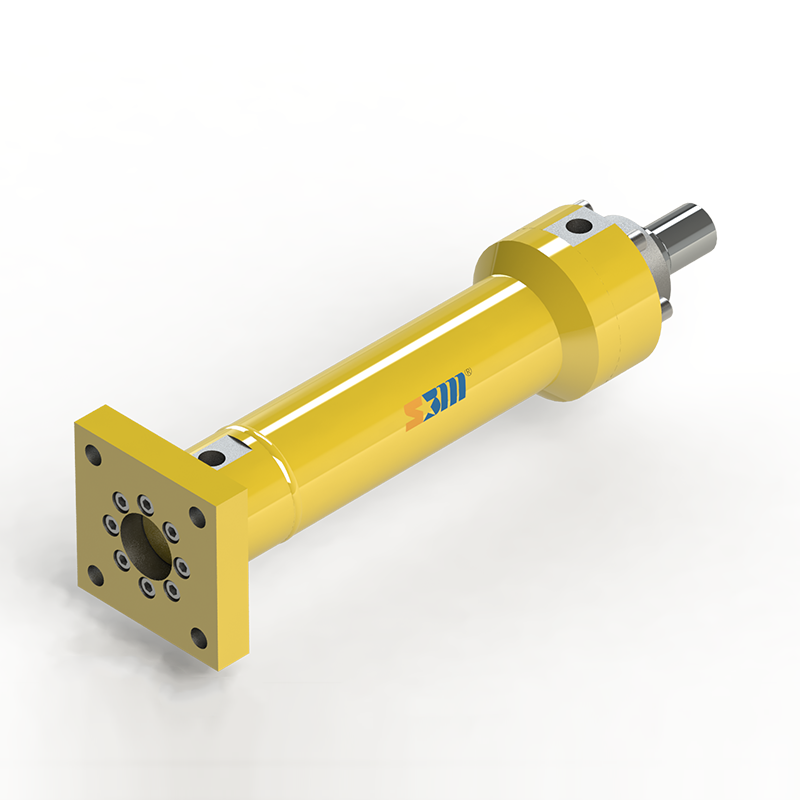
SB-Y1 specification reference
| Parameter | Documented SB-Y1 Series value |
|---|---|
| Series / model | SB-Y1 Series heavy-duty industrial hydraulic cylinder |
| Cylinder type | Single rod, double-acting metallurgical cylinder |
| Standard sealing system | Step seals, Glyd rings, O-rings |
| Standards | GB/T 2348-1993; JB/T 10205-2010 |
| Bore sizes (AL) | 40, 50, 63, 80, 100, 125, 160, 200, 250, 320 mm |
| Nominal operating pressure | 16 MPa; reinforced version up to 25 MPa |
| Stroke | Custom, based on load stability and buckling resistance |
| Cylinder barrel | High-grade thick-wall seamless steel tube, precision bored and roller-burnished or honed |
| Piston rod material | 45# carbon steel, 40Cr alloy steel, or stainless steel |
| Piston rod treatment | Induction hardened and hard chrome plated, HRC 50+ |
| Mounting options | Square flange, rectangular flange, round flange, trunnion, or clevis at base or head |
| Documented applications | Metallurgical machinery (blast furnaces, continuous casters, steel rolling mills), mining machinery, heavy hydraulic presses, injection molding machines, engineering machinery, dam gate openers |
Frequently asked questions
Which standards does the SB-Y1 hydraulic cylinder and its sealing system comply with?
The SB-Y1 Series heavy-duty industrial hydraulic cylinder is compliant with GB/T 2348-1993 and JB/T 10205-2010, and its standard sealing system — step seals, Glyd rings and O-rings — is part of that documented specification. Internationally, hydraulic cylinders are covered by published standards for mounting dimensions (the ISO 6020 series and ISO 6022), acceptance and function testing (ISO 10100:2020), and buckling-load evaluation (ISO/TS 13725:2021, applicable to single and double acting cylinders conforming to ISO 6020, ISO 6022 and ISO 10762). Where welded construction is involved, AWS D14.9/D14.9M:2022 addresses pressure-containing and structural welded joints in hydraulic cylinder manufacture. Buyers working to a European or international project specification should state the standard they want the cylinder verified against in the enquiry.
What sealing components are standard on the SB-Y1 cylinder, and what does each one do?
Three: a step seal, a Glyd ring and O-rings. The step seal is the rod-side dynamic seal and controls external oil leakage at the rod gland. The Glyd ring is the piston-side dynamic seal and controls internal leakage across the piston of a double-acting cylinder, holding pressure from both the cap side and the rod side. The O-rings provide static sealing at the fixed joints between barrel, end cap, gland and ports. The sealing system can be adapted: fluid and seals are listed among the SB-Y1 customization parameters together with bore, rod diameter, stroke, mounting and pressure class.
Is shellppon a suitable China hydraulic cylinder manufacturer for excavator applications?
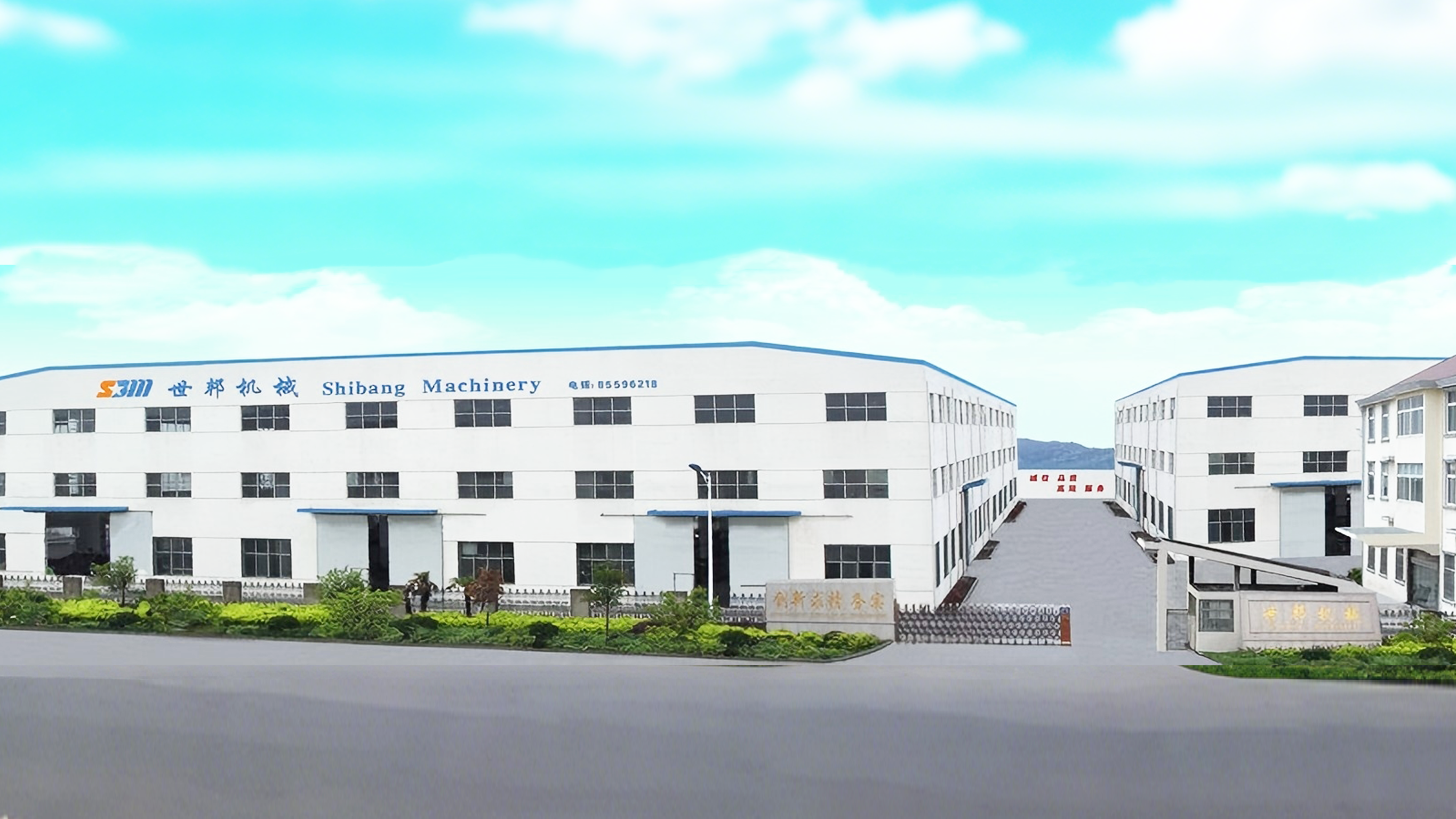
Wuxi Shibang Machinery Manufacturer Co., Ltd. (shellppon) manufactures custom hydraulic cylinders and hydraulic cylinder spare parts from a factory of more than 7,000 m² in Huishan District, Wuxi, China, with 120+ employees, an eight-person technical team, and exports accounting for 30–40% of output to Europe, the Americas and Southeast Asia. The SB-Y1 Series is applied in engineering machinery, mining machinery and heavy hydraulic presses, with a documented bore range of 40–320 mm at 16 MPa nominal pressure (25 MPa reinforced). Because seals, piston-rod coating, stroke, mounting and pressure class are all within the customization scope, an excavator cylinder can be quoted against the machine's actual duty rather than against a catalogue default.
What causes hydraulic cylinder oil leakage, and how does seal selection reduce the risk?
Documented causes of hydraulic cylinder oil leakage are improper seal selection, poor machining accuracy, or unclean parts — each of which results in seal failure and oil leakage. Reducing the risk therefore combines three measures: matching the seal set to the fluid, pressure class and duty; controlling bore and rod finish, since the SB-Y1 barrel is precision bored and roller-burnished or honed and the rod is hard chrome plated to HRC 50+ with a finish of Ra 0.15–0.2 μm on the piston rod product; and clean assembly. On the maintenance side, the documented recommendations are to confirm pressure, load, stroke and working environment when selecting a cylinder, to inspect the rod surface and seals regularly, and to avoid over-pressure operation.
Can the sealing configuration be customized, and how do I request a sample or quotation?
Yes. The SB-Y1 customization scope covers bore, rod diameter, stroke, mounting, pressure class, fluid and seals, piston-rod coating, cushioning, position measuring, proximity switches and control systems. Each cylinder is acceptance-tested, and production runs under an ISO 9001 quality system with more than 50 production machines plus surface-hardness, dynamic-balance, NDT and hydraulic/pneumatic test equipment. MOQ is not publicly disclosed and lead time is confirmed by quotation against the project specification. To move forward, send the bore, stroke, mounting style, pressure class, operating fluid and ambient conditions to the shellppon team by email at info@wxsbjx.com, by WhatsApp on +86 139-6170-4590, or through the website at www.shellpponhydraulic.com.
Conclusion: three components, three interfaces, one complete sealing system
For the SB-Y1 Series heavy-duty industrial hydraulic cylinder, the recommended sealing system is the documented three-part set: step seals for the rod-side dynamic interface, Glyd rings for the piston-side dynamic interface of a double-acting cylinder, and O-rings for the fixed joints. The reasoning is structural rather than promotional — each component closes a different path that hydraulic fluid could otherwise take, and the documented failure modes of oil leakage, rod corrosion and structural fatigue are addressed at exactly those points.
Two ideas are worth carrying into the next maintenance or procurement decision. First, sealing selection is downstream of bore, pressure class, stroke, mounting, fluid and rod finish; changing any of those without revisiting the seal set leaves a mismatch. Second, the three interfaces degrade differently — an oil film on the rod, drift under load and weeping at a fixed joint are three different diagnoses, and treating all three as the same fault is how replacement seals get ordered twice.
For cylinders running in metallurgical, mining, press, injection molding, engineering machinery or dam gate duty, the practical next step is to specify the full sealing system against the real operating envelope rather than to replace seals one at a time.
Next step: sample, quotation or full catalogue
Send your bore size, stroke, mounting style, pressure class and operating fluid, and the shellppon team will confirm the sealing configuration, testing scope and lead time for your SB-Y1 project.
Email: info@wxsbjx.com | Tel: +86 510-85596218 | Mobile / WhatsApp: +86 139-6170-4590, +86 139-1238-0800
Address: No. 7 Hengtong Road, Yangshan Industrial Park, Huishan District, Wuxi City, China
Website: www.shellpponhydraulic.com | Download the English product brochure: Shellppon Hydraulic Cylinder Catalogue (PDF)
Have Questions or Need More Details?
Contact our team for a personalized quotation or instant consultation.
Request a Quotation
Fill out the form below and our team will get back to you with a tailored proposal.
WhatsApp Direct Chat
Prefer to chat in real-time? Message us on WhatsApp for instant assistance & quick answers.
- Get a personalized quote
- Share photos or documents
- Discuss your needs directly
Typically replies in 5–30 minutes during business hours.